Oral Ketamine: Troche & Rapidly Dissolving Tablet
At-Home Telehealth Treatment
Effective at-home ketamine without needles or sprays. Our oral options dissolve in the mouth — never swallowed — and range from the slow, immersive troche to the fast, on-the-go rapidly dissolving tablet. Prescribed by Dr. David Mahjoubi, MD for depression, anxiety, PTSD, and chronic pain.
Absorbed through the lining of the mouth — designed to be dissolved, not ingested.
Oral ketamine, the way it's meant to be taken
For patients who would rather not use a nasal spray, NutraBrain offers oral ketamine in three forms: the sublingual troche, the rapidly dissolving tablet (RDT), and the sublingual droplet. Every one of these is designed to be dissolved in the mouth and held sublingually — not swallowed. That’s the key. When ketamine is swallowed, much of it is broken down by the digestive system and liver before it ever reaches the brain. By letting it absorb through the lining of the mouth instead, more of the medication enters your bloodstream directly.
Three oral options, each with a purpose
Sublingual Troche
The deep session
Absorbed through the nasal lining, it enters the system faster than any oral or sublingual route of ketamine.
Rapidly Dissolving Tablet
The middle ground
Dissolves in just a few minutes for a quicker onset and a shorter window of effects. Ideal for patients on the go who want oral dosing without a long journey.
Sublingual Droplet
California only
A liquid ketamine formulation placed under the tongue by dropper. A specialized option currently offered to California residents.
Ketamine Troche: the sublingual tablet built for therapy sessions
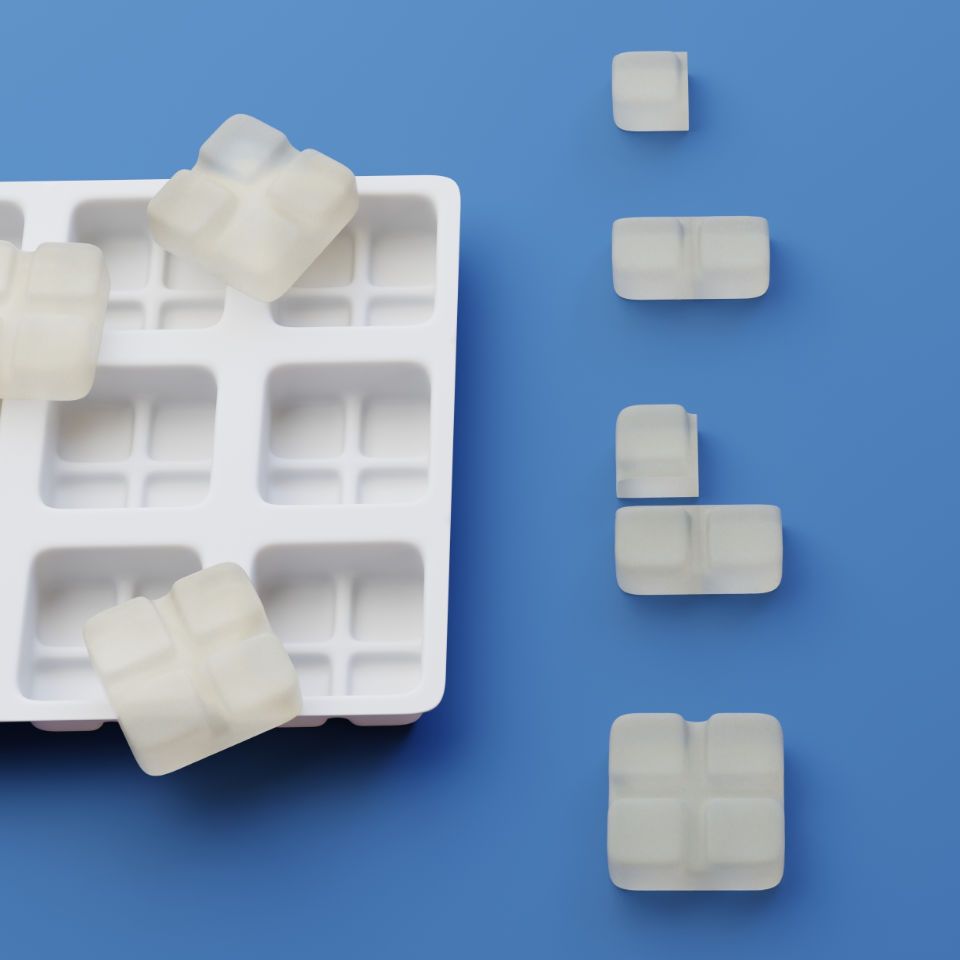
The Ketamine Troche is a sublingual lozenge compounded specifically to dissolve slowly under the tongue or between the cheek and gum. Because it releases its medication gradually, the therapeutic experience is longer and more immersive — typically about 25 minutes of active journey time, give or take roughly 5 minutes depending on dose, individual metabolism, and how long you hold the saliva sublingually. Dr. Mahjoubi can prescribe troches in doses up to 200 mg for patients who need a stronger session.
Why patients love the troche
- Deep, immersive sessions. The slower release produces a richer, more introspective experience — ideal for psychotherapy-adjacent work, integration therapy, and journaling.
- Microdosing flexibility. Because the troche is a solid, consistent tablet (not a liquid), you can bite off a half or a quarter to microdose on low-energy days without losing dosing accuracy. Most patients use a full troche once or twice per week for dedicated sessions and save smaller pieces for mood maintenance.
- Predictable experience. Patients who want to plan around the duration of effects — for example, setting aside a protected afternoon with a therapist or trusted sitter — appreciate the roughly 25-minute experience window.
- Clean sublingual absorption. Medication is absorbed through the oral mucosa and enters the bloodstream directly, bypassing first-pass liver metabolism.
Want a deeper, guided ketamine experience?
The troche may be the right fit. Start with our quick new-patient form.
Rapidly Dissolving Tablet (RDT): the middle ground
The rapidly dissolving ketamine tablet (RDT) is the troche’s faster cousin. As the name suggests, it is formulated to dissolve quickly under the tongue — typically within a few minutes — so it behaves more like the nasal spray in terms of onset, but without the nasal drip. The trade-off is that the experience also wears off faster than a troche; the window of active effects is shorter.
Who it’s best for: Patients who want oral administration (no nose spray) and prefer a quicker in-and-out session over a long, immersive journey. It’s also a good option for patients who don’t love the taste or texture of a slow-dissolving troche. Because the absorption is sublingual, avoid swallowing saliva for as long as possible while the tablet dissolves, and avoid food and drink for 15 minutes before and after.
Sublingual Ketamine Droplet (California only)
The sublingual ketamine droplet is a liquid formulation delivered under the tongue with a dropper. It is another oral option in the NutraBrain™ toolkit, but in practice we have the least clinical experience with this form — both at our clinic and across the field generally — because many compounding pharmacies simply do not know how to prepare it consistently. For that reason, the sublingual droplet is currently limited to California residents, where we have identified pharmacies that reliably compound it.
If you are outside California or want a formulation with a longer evidence base in our program, the ketamine nasal spray, troche, or rapidly dissolving tablet are generally the better starting point.
What the research shows about oral & sublingual ketamine
Use of ketamine for these conditions is generally off-label, and individual results vary. Here is a plain-language summary of the published evidence for oral and sublingual administration.
Oral ketamine works for depression
A meta-analysis of randomized controlled trials of oral ketamine for depression found it both effective and well tolerated, with a number-needed-to-treat of about 5 for response and 9 for remission across 592 patients, and no serious adverse events reported.1 Researchers concluded that oral racemic ketamine is a reasonably well-tolerated and rapidly effective option for depression and suicidal ideation, and may be better accepted and tolerated than IV ketamine in many outpatients.
Sublingual absorption is real and measurable
A clinical pharmacokinetic study established the absolute bioavailability of sublingual ketamine at about 29%— meaningfully higher than swallowing it, where most of the dose is lost to first-pass metabolism. Measurable ketamine appeared in the blood within 5 minutes of sublingual dosing.2 This is exactly why our oral forms are designed to be held in the mouth, not swallowed.
Real-world and controlled-trial support
Real-world outcome studies of sublingual ketamine report improvements in depression and anxiety in everyday clinical practice,3 and a randomized, placebo-controlled phase 2 trial of an extended-release ketamine tablet demonstrated antidepressant benefit in treatment-resistant depression — further evidence that oral, slow-release ketamine can be effective.4
Curious whether an oral form fits your goals?
Tell us what you’re looking for and Dr. Mahjoubi will help you choose.
How the oral forms differ from the ketamine nasal spray
The honest trade-off is bioavailability. Compared with the nasal spray, the oral forms have somewhat lower bioavailability — meaning a bit less of each dose reaches your bloodstream. For patients whose main goal is efficient, everyday symptom relief, that’s why many prefer the spray.
But here’s the flip side: for patients who specifically want a dissociative experience, that slower, lower-bioavailability absorption is actually an advantage of the troche. You would have to take a great many sprays to reach the kind of immersive experience a single troche produces. If having a guided, introspective journey once or twice a week is part of what helps you, the troche is the way to go — and the rapidly dissolving tablet offers a quicker onset when you want oral dosing without the long session.
| Goal | Best fit |
|---|---|
| Efficient daily / microdose relief, highest bioavailability | Nasal spray |
| A deep, immersive ~25-minute experience for session work | Sublingual troche |
| Oral dosing with a quick onset, shorter window, on the go | Rapidly dissolving tablet |
| Specialized liquid sublingual option (California) | Sublingual droplet |
Common questions about the oral ketamine forms
-
The main difference is bioavailability — the oral forms deliver somewhat less of each dose into your bloodstream than the nasal spray. For pure efficiency, the spray usually wins. But if you want an experience, that's where the troche shines: its slow release produces a dissociative journey that would take a large number of sprays to match. So if you're someone who finds a guided, dissociative experience once or twice a week helpful, the troche is the way to go.
-
The troche dissolves slowly and gives you an experience — typically about a 25-minute window of active effects, give or take roughly 5 minutes depending on dose and metabolism. That longer, more immersive arc is exactly why patients choose it for dedicated session work.
-
The RDT has a quicker onset than the troche because it dissolves faster — but it also wears off faster. It's the better choice for people on the go who want oral dosing and a shorter in-and-out session rather than a long journey, or for those who don't love the texture of a slow-dissolving troche.
-
No — every oral form is designed to dissolve in the mouth and absorb sublingually, not to be swallowed. Hold the saliva in your mouth, swish to maximize absorption, and follow Dr. Mahjoubi's specific instructions on whether to swallow or spit out any residue at the end. Avoid food and drink for 15 minutes before and after.
-
Yes. Because the troche is a solid, consistent tablet, you can bite off a half or a quarter for accurate low-dose days. Many patients use a full troche once or twice weekly for sessions and save smaller pieces for mood maintenance.
-
The sublingual droplet is currently limited to California residents, because reliable compounding of this liquid form is hard to find elsewhere. If you're outside California, the nasal spray, troche, or rapidly dissolving tablet are the better starting points.
A NutraBrain™ membership perk: direct access to Dr. David Mahjoubi
Picking the right formulation, adjusting your dose, and troubleshooting a session is not a one-and-done decision — it evolves with you. That is why every NutraBrain™ member gets something no algorithm or app-based clinic can offer: once you are a member, you can always text or email Dr. David Mahjoubi directly for guidance.
Whether you want to fine-tune your microdose, switch from the nasal spray to a troche for a deeper session, or simply ask a question before your next dose, he is there. He will never leave you. That kind of continuity of care — from a board-certified anesthesiologist and President of the American Board of Ketamine Physicians — is the backbone of the program.
Become a NutraBrain member
Get the right oral formulation — and a doctor who stays with you. Start here.
References
- Oral ketamine for the treatment of major depressive and bipolar disorder: a randomized controlled trial and meta-analysis. J Affect Disord, 2025. ScienceDirect
- Rolan P, et al. The absolute bioavailability of racemic ketamine from a novel sublingual formulation. Br J Clin Pharmacol, 2014. PMC4093926
- Sublingual Ketamine for Depression and Anxiety: A Retrospective Study of Real-World Clinical Outcomes. medRxiv, 2024. medRxiv
- Extended-release ketamine tablets for treatment-resistant depression: a randomized placebo-controlled phase 2 trial. Nat Med, 2024. PMC11271411