Compounded Ketamine-Oxytocin Nasal Spray for Treatment-Resistant Depression & PTSD
Compounded Prescription · Physician-Supervised · Telehealth in 13 States
A dual-mechanism intranasal protocol developed by a board-certified anesthesiologist for adults whose depression or PTSD hasn’t responded to first-line treatments. Ketamine drives the rapid antidepressant effect. Oxytocin supports emotional regulation and fear extinction in the same delivery.
- Board-certified anesthesiologist oversight
- 3,900+ patients treated since 2014
- Dispensed by licensed 503A pharmacies
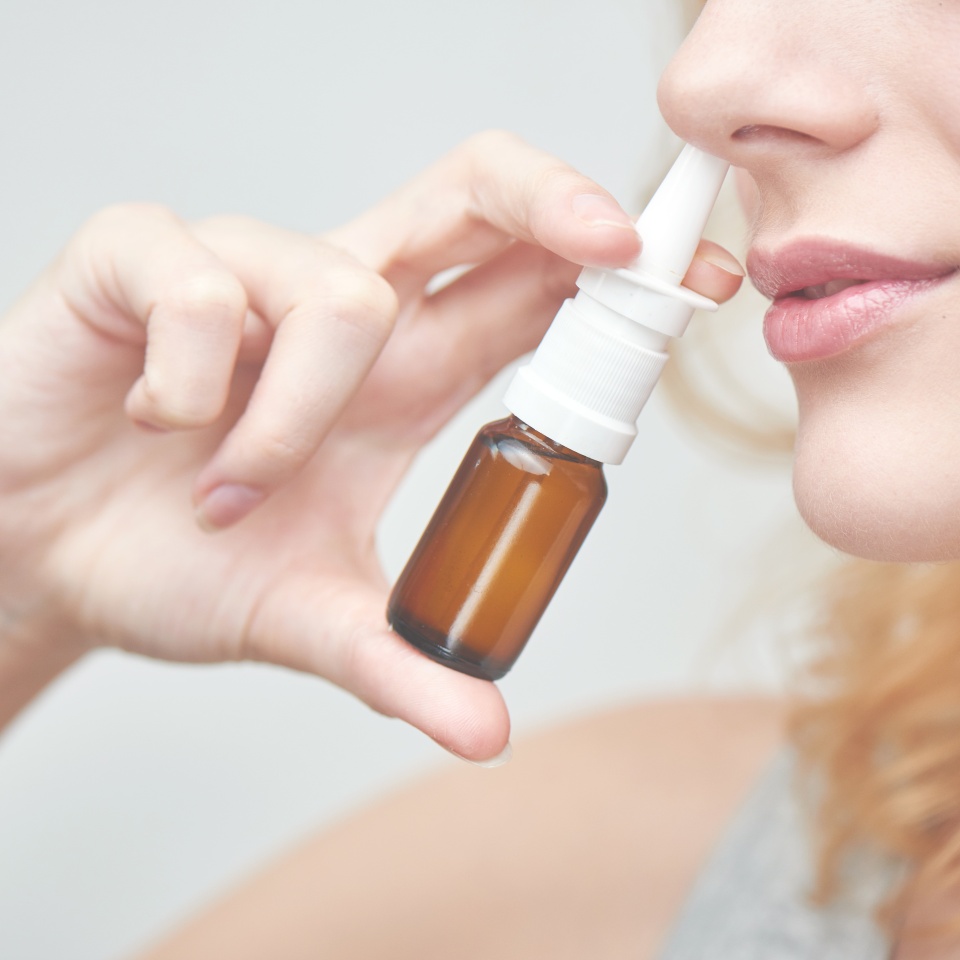
A single compounded nasal spray combining two of the most-studied molecules in modern psychiatry
What It Is
The NutraBrain compounded ketamine-oxytocin nasal spray is a physician-formulated, prescription-only preparation that delivers two distinct active ingredients in one intranasal dose. Low-dose ketamine acts as a rapid-onset NMDA-receptor modulator with well-established antidepressant and anti-suicidal effects in randomized clinical trials. Oxytocin is a neuropeptide with growing clinical evidence in PTSD-spectrum conditions, working through different pathways — amygdala reactivity, social-emotional processing, fear extinction — than any traditional antidepressant.
The two molecules don’t compete pharmacologically; they target separate, complementary circuits. The compounded formulation is prepared by a licensed 503A compounding pharmacy, dispensed only against an individual physician prescription, and used at home under remote clinical oversight.
This is not a wellness supplement. It is a serious clinical option intended for adults whose depression, PTSD, or both have not responded adequately to standard first-line treatments — SSRIs, SNRIs, evidence-based therapy, or combinations of those — and who meet candidacy criteria after a full clinical evaluation.
The NutraBrain preparation
| Form | Compounded intranasal spray |
|---|---|
| Actives | Ketamine + oxytocin |
| Grade | USP pharmaceutical |
| Source | Licensed 503A pharmacy |
| Dosing | Individualized by physician |
| Access | Telehealth intake + physician review |
| States | 13 (and expanding) |
| Oversight | Board-certified anesthesiologist |
Two molecules, two mechanisms, one clinical objective
How It Works
Most psychiatric medications act through a single pathway. The ketamine-oxytocin combination engages two separate neurochemical systems whose effects, in clinical practice, support each other.
Glutamate / NMDA pathway
TARGET: rapid antidepressant effect & suicidality reduction
Ketamine works primarily as an NMDA-receptor modulator and downstream activator of synaptic plasticity. In peer-reviewed RCTs, single subanesthetic doses have produced measurable reductions in depression severity within 24 hours — a speed of action no traditional antidepressant approaches.
- Rapid onset (hours, not weeks)
- Studied across treatment-resistant depression and chronic PTSD
- Effect supported by BDNF release and synaptogenesis
- Active component in FDA-approved Spravato (esketamine)
Amygdala / social-emotional pathway
TARGET: fear regulation, integration, emotional engagement
Intranasal oxytocin acts on receptor-dense regions including the amygdala and prefrontal cortex. In published clinical research, single doses have been shown to normalize amygdala reactivity and reduce provoked PTSD symptoms in randomized, placebo-controlled studies.
- Modulates amygdala reactivity to emotional/threat cues
- Supports fear extinction and social engagement
- Studied as an adjunct to trauma-focused psychotherapy
- Distinct pathway from monoamine antidepressants
Why the combination, clinically
A common pattern in patients with treatment-resistant depression and PTSD is that ketamine alone produces a measurable mood-lift but the patient still feels emotionally guarded, disconnected, or unable to integrate the experience. Oxytocin’s effect on the amygdala and social-engagement circuits — documented in the research below — addresses that gap from a separate angle, without competing with ketamine’s mechanism.
This combination is a clinical-judgment product, not a substitute for, and not a replication of, the FDA-approved esketamine pathway (Spravato). It is offered as an option for patients in whom the dual-mechanism rationale fits the clinical picture, after full medication review and candidacy evaluation.
What the published peer-reviewed evidence shows
The Research
Below are the most-cited randomized controlled trials and clinical studies supporting each component of the protocol, with direct links to the source papers.
Ketamine for treatment-resistant depression
2000
The original RCT: antidepressant effects of ketamine
Berman and colleagues conducted the first randomized, double-blind, placebo-controlled trial of subanesthetic IV ketamine in depressed patients, observing rapid and significant reductions in depression scores within hours of infusion. This study launched the modern field of rapid-acting antidepressants. Biological Psychiatry
2006
Landmark TRD trial: ketamine in treatment-resistant major depression
Zarate and colleagues conducted a randomized, placebo-controlled trial of a single ketamine infusion in patients with treatment-resistant major depression, showing rapid antidepressant effects within 110 minutes that were maintained for up to one week. This trial established ketamine as a credible TRD intervention. Archives of General Psychiatry
2013
Larger-scale replication with active control
Murrough and colleagues compared a single ketamine infusion to midazolam (an active placebo) in 73 patients with treatment-resistant depression. Ketamine produced significantly greater response rates at 24 hours (64% vs. 28%) sustained for up to seven days — the strongest active-controlled evidence to date at the time of publication. American Journal of Psychiatry
Ketamine for treatment-resistant depression
2014
First RCT of ketamine for chronic PTSD
Feder and colleagues conducted a randomized, double-blind, crossover trial of single-dose IV ketamine versus midazolam in patients with chronic PTSD. Ketamine was associated with significant and rapid reductions in PTSD symptom severity at 24 hours and was well tolerated. This study provided the first evidence base for ketamine as a PTSD intervention. JAMA Psychiatry
2021
Repeated-dose ketamine for chronic PTSD
A follow-up randomized controlled trial of six ketamine infusions over two weeks (versus midazolam) demonstrated significantly greater and more durable PTSD symptom improvement, including in patients with comorbid depression. This established repeated dosing as a viable approach for sustained effect. American Journal of Psychiatry
Ketamine for treatment-resistant depression
2016
Oxytocin normalizes amygdala connectivity in PTSD
Koch and colleagues conducted a randomized, placebo-controlled fMRI study showing that a single 40 IU intranasal oxytocin dose normalized abnormal amygdala functional connectivity in PTSD patients. This established a measurable, brain-level signature of oxytocin’s anxiolytic effect in the trauma-spectrum population. Neuropsychopharmacology
2017
Oxytocin reduces provoked PTSD symptoms
Flanagan and colleagues conducted a randomized, double-blind, placebo-controlled trial of intranasal oxytocin in female PTSD patients undergoing symptom-provocation testing. Oxytocin reduced the intensity of provoked PTSD symptoms, particularly avoidance, providing the first direct symptom-level evidence in a clinical PTSD population. BMC Medicine
2017
Oxytocin to prevent PTSD development after acute trauma
Van Zuiden and colleagues conducted a randomized controlled trial of intranasal oxytocin administered early after acute trauma in emergency department patients. Oxytocin reduced PTSD symptom development at follow-up in patients with high baseline distress, supporting an early-intervention application. Biological Psychiatry
An honest read of the evidence
Each individual component — ketamine for TRD, ketamine for PTSD, intranasal oxytocin for PTSD — has substantive peer-reviewed evidence behind it, including the randomized controlled trials linked above. The specific combination of compounded intranasal ketamine and oxytocin, however, has not yet been validated in a Phase 3 RCT as a fixed-dose combination product. Its use is a clinical-judgment application grounded in the mechanistic complementarity of the two molecules and the published evidence for each component separately.
Compounded ketamine and intranasal oxytocin are not FDA-approved for the treatment of depression or PTSD; both are used off-label and require physician evaluation. This is why the eligibility review exists — so the current state of the evidence can be discussed in the context of your individual clinical picture, medication history, and other treatments tried.
Who this protocol is — and isn’t — designed for
Is It Right For You
A core purpose of the intake review is to identify good candidates and to screen out people for whom this protocol could be unsafe or simply isn’t the right next step.
May be a candidate
- Adults 18+ with diagnosed depression or PTSD that hasn’t responded adequately to at least one full course of standard treatment
- Currently engaged in (or willing to engage in) ongoing mental-health care alongside this protocol
- Stable medical status with no uncontrolled cardiovascular, neurologic, or psychiatric conditions
- Able to complete a thorough medication review and follow the dosing schedule as prescribed
- Comfortable with a program grounded in published research and clinical judgment rather than guaranteed outcomes
Should not use this protocol
- Active or recent psychotic symptoms, schizophrenia-spectrum disorders, or first-degree family history of psychosis
- Uncontrolled hypertension or cardiovascular disease — ketamine transiently raises blood pressure
- Current use of MAOIs or recent serotonin syndrome history
- Active substance use disorder, particularly involving ketamine or dissociatives
- Pregnancy, suspected pregnancy, or breastfeeding
- Anyone whose physician review identifies a conflicting medication, condition, or risk profile
Important safety information
MAOIs & serotonin syndrome
This protocol is not appropriate for anyone taking MAOIs, recently discontinued from MAOIs, or with a history of serotonin syndrome. All current medications — including SSRIs, SNRIs, stimulants, and over-the-counter supplements — are reviewed during intake before any prescription is issued.
Cardiovascular considerations
Ketamine causes a transient rise in blood pressure and heart rate. Uncontrolled hypertension, recent cardiac events, unstable angina, or significant cardiovascular disease are exclusions. Blood pressure monitoring is part of the protocol.
Psychiatric exclusions
Active psychosis, schizophrenia-spectrum disorders, mania, or first-degree family history of psychotic disorder are contraindications. Ketamine’s dissociative properties can worsen these conditions.
Substance use & dependence
Ketamine has abuse potential and is a Schedule III controlled substance. Active substance use disorder — particularly involving ketamine, other dissociatives, or stimulants — is an exclusion. The protocol is dispensed in dose-limited quantities by federal regulation.
Pregnancy & breastfeeding
Compounded ketamine and intranasal oxytocin are not appropriate during pregnancy, suspected pregnancy, or breastfeeding. Patients of reproductive age are screened and counseled during intake.
Driving & safety after dosing
You cannot drive, operate machinery, or make consequential decisions for at least several hours after a dose. Sessions are conducted at home in a quiet, safe environment with a sober support person available, per the protocol you’ll receive after intake.
This is a summary, not a complete list of risks. A full review of your medications, medical history, and mental-health history is required before any prescription is issued, and is the most important step in the process.
A clear, physician-led pathway from intake to treatment
How To Begin
Compounded ketamine is a Schedule III controlled substance dispensed only against a valid physician prescription. There is no shortcut. The intake is the program.
1
Complete intake
Fill out the secure online form covering your mental-health history, current medications, prior treatments tried, and goals.
2
Physician review
A board-certified physician reviews your intake, screens for interactions and contraindications, and determines candidacy.
3
Compounded & dispensed
If approved, the compounded ketamine-oxytocin nasal spray is prepared by a licensed 503A pharmacy and shipped to your home with dosing instructions.
4
Ongoing oversight
Telehealth follow-ups, dose adjustments, and ongoing physician access — so your protocol can be tuned, paused, or stopped as needed.
Two paths into the protocol
Pricing
Whether you want a focused trial or ongoing care with Dr. Mahjoubi, the structure is straightforward. Your first 30-day prescription is always included with the initial consultation — there is no separate intake fee.
Pay as you go
Short-Term Reset
A focused, time-limited course of ketamine therapy. No subscription required.
$400/ visit
One flat fee. No recurring charges.
What’s Included
- Video consultation with Dr. Mahjoubi
- One personalized 30 to 60 day prescription paid for by NutraBrain
- No subscription, no auto-renewal
- Need more medication later? Book another $400 visit anytime — includes a fresh consult.
Best For
First-time patients, working through a specific issue, or occasional refills a few times per year.
For ongoing care
Long-Term Care
An ongoing relationship with Dr. Mahjoubi, with email access and effortless refills.
$400 + $69/mo
Or pay $950/year upfront — save $278 vs monthly billing.
What’s Included
- Initial video consultation with Dr. Mahjoubi
- First 30-day prescription included
- $69 per month subscription available after first video consultation
- Unlimited email access to Dr. Mahjoubi
- Effortless refills every 3–4 months — no new visit required
- 1–2 brief video check-ins per year
- Cancel anytime
Best For
Chronic depression, anxiety, PTSD, or chronic pain — where consistent physician oversight matters most.
Only 48 patient spots awarded per month nationwide. NutraBrain is a cash-pay practice — we do not bill insurance, but a superbill can be provided for out-of-network reimbursement where applicable. Compounded preparation refills are dispensed in dose-limited quantities per federal regulation.
Ketamine-oxytocin nasal spray, answered
Common Questions
-
It is a physician-formulated, prescription-only intranasal preparation that combines low-dose ketamine with oxytocin in a single nasal spray. Ketamine acts on the glutamate/NMDA pathway to produce rapid antidepressant and anti-suicidal effects. Oxytocin acts on amygdala and social-processing pathways to support fear extinction and emotional regulation. At NutraBrain Clinic the combination is compounded by a licensed 503A pharmacy and is available only following a clinical evaluation.
-
No. Spravato is FDA-approved esketamine, the (S)-enantiomer of ketamine, and is administered exclusively in certified in-office REMS settings. The NutraBrain Clinic preparation uses compounded racemic ketamine combined with oxytocin, dispensed by a 503A compounding pharmacy after physician evaluation, and is used at home under remote clinical oversight. It is off-label and is not a substitute for Spravato — it is a separate clinical option.
-
Compounded ketamine is not FDA-approved for treatment-resistant depression or PTSD; both indications are off-label and supported by a substantial peer-reviewed evidence base (see the research section). Oxytocin is not FDA-approved as a psychiatric medication and its use for PTSD or related conditions is also off-label. The combination product itself is a compounded prescription, dispensed by a 503A pharmacy in response to an individual physician prescription, and is not FDA-approved as a combination.
-
Most patients on standard SSRIs or SNRIs can safely use compounded ketamine under medical supervision. However, certain medications — including MAOIs, other strong MAO inhibitors, and a history of serotonin syndrome — are contraindications. Medication review is a required part of intake. Patients on stimulants, benzodiazepines, lithium, or psychiatric medications outside the SSRI/SNRI class need individualized review.
-
After intake and physician approval, the compounded nasal spray is shipped directly to your home from a licensed compounding pharmacy. Patients self-administer in a quiet setting at home on a defined dosing schedule. Sessions take roughly 60–90 minutes including the active dissociative window and a quiet integration period. A sober support person should be present during early sessions. Follow-up appointments and dose adjustments are handled via telehealth.
-
Ketamine has been associated in randomized controlled trials with measurable antidepressant effects within 24 hours of a single dose, with peak effect typically at 24–72 hours. The duration of effect varies; repeated dosing has been studied for sustained response. Oxytocin’s effects are similarly acute. Individual results vary, and not every patient responds. The intake includes realistic expectation-setting based on your specific clinical picture.
-
NutraBrain Clinic operates under telehealth licensure in 13 US states and is expanding. State licensure is verified during intake. If your state isn’t currently covered, you can request a notification when we expand into it.
-
All prescribing is done by Dr. David Mahjoubi, a board-certified anesthesiologist with over a decade in ketamine medicine and more than 3,900 patients treated. He is the founder of NutraBrain Clinic and President of the American Board of Ketamine Physicians.
Start with an eligibility review
Find out whether physician-supervised compounded ketamine-oxytocin nasal spray is an appropriate next step in your care.
Start Your Eligibility Review →
NUTRABRAIN CLINIC
Written and medically reviewed by David Mahjoubi, MD
Board-certified anesthesiologist · Founder, NutraBrain Clinic · President, American Board of Ketamine Physicians
Last medically reviewed: June 2026
Medical disclaimer. This page is for general educational purposes only and does not constitute medical advice, diagnosis, or treatment, and does not establish a physician–patient relationship. Compounded ketamine and intranasal oxytocin are not FDA-approved for the treatment of depression, PTSD, or any psychiatric condition; both are used off-label and require physician evaluation. Ketamine is a Schedule III controlled substance. Individual results vary and are not guaranteed. The research summarized on this page is selected in good faith but is not exhaustive, and clinical evidence continues to evolve. This protocol is not appropriate for everyone — including, among others, people with active or recent psychosis, uncontrolled cardiovascular disease, current MAOI use, active substance use disorder, or pregnancy. Always consult a qualified healthcare provider about your individual circumstances before starting, stopping, or combining any medication.