Nasal vs Sublingual Ketamine
Reviewed and authored by Dr. David Mahjoubi, MD — Board-Certified Anesthesiologist, President of the American Board of Ketamine Physicians (ABKP), Founder of NutraBrain Clinic. Practicing ketamine medicine since 2014. Author of The Art & Science of Ketamine Medicine.
If you’ve been prescribed ketamine for depression, anxiety, PTSD, or chronic pain, you’ve probably been offered a choice between forms: a nasal spray or a sublingual troche/tablet. Both work. Both are clinically validated. They feel different and produce slightly different experiences — and choosing between them comes down to a few specific factors.
A quick overview of the two routes
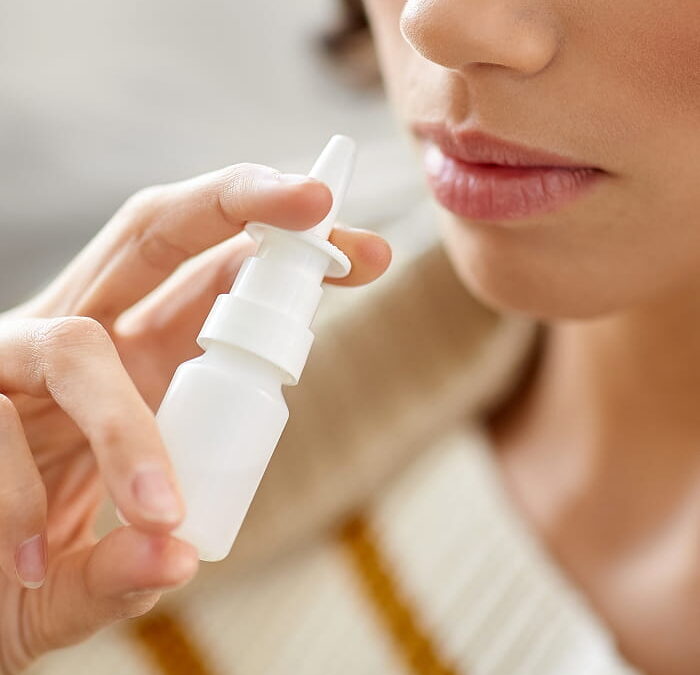
Intranasal ketamine is a liquid solution sprayed into the nostrils, absorbing through the nasal mucosa into the bloodstream and reaching the brain within minutes. Pharmacy-compounded intranasal ketamine is delivered in calibrated single-spray doses (typically 50–75 mg per session for adults).
Sublingual ketamine comes in two formats: troches (slow-dissolving lozenges held under the tongue 10–20 minutes) and rapidly dissolving tablets (RDTs, dissolve in 1–2 minutes). The drug absorbs through the vascular network under the tongue, bypassing some first-pass liver metabolism. Doses typically range 50–200 mg per session.
Both are sub-anesthetic — far below surgical anesthesia doses — and both are appropriate for at-home use under physician supervision.
Pharmacokinetics — speed, peak, duration
| Property | Intranasal | Sublingual Troche | Sublingual RDT |
|---|---|---|---|
| Onset of effects | 5–10 min | 15–25 min | 10–15 min |
| Peak effect | 20–40 min | 45–60 min | 30–45 min |
| Duration of dissociation | 30–60 min | 60–90 min | 45–75 min |
| Bioavailability (approx.) | 25–50% | 20–30% | 20–30% |
| Total session length | ~60 min | ~90–120 min | ~75–90 min |
Intranasal is fast on and fast off. Patients who want a more contained session or prefer not to dwell in the dissociative state often prefer it. Bioavailability is the highest of any non-IV route. Sublingual troches produce a longer, gentler curve. Many patients describe this as more “therapeutic” — more time to sit with the experience, more room for emotional processing. Rapidly dissolving tablets sit between the two.
Patient experience differences
Intranasal: clear shift within 10 minutes. Some patients describe a fast “rise.” Side effects (mild nausea, brief bitter taste, blocked nasal sensation) usually short-lived.
Sublingual: slower, gradual build. Patients often notice nothing for 10–15 minutes, then describe a smooth transition into the therapeutic state. The trade-off is the hold time — patients who struggle to keep the medication under the tongue without swallowing lose dose to the GI tract, where bioavailability is much lower (~5%).
Subjective ratings from my patients generally split roughly 50/50 between routes. Almost no one says one is “better” — they say one is better for them.
Which form for which condition
Treatment-resistant depression and anxiety: Either route is appropriate. Many patients start with troches for the longer therapeutic arc and switch to nasal spray for maintenance once they understand the experience.
PTSD: Sublingual troches are often preferred. The longer therapeutic window provides more time for trauma processing, particularly when paired with structured psychotherapy between sessions.
OCD and persistent ruminative thinking: Either route. Some patients respond better to the faster, sharper onset of nasal spray for breaking intrusive thought loops.
Chronic pain (neuropathic, fibromyalgia, CRPS): Sublingual troches at lower doses taken more frequently tend to outperform high-dose dissociative sessions for pain. Sub-perceptual dosing often works better for pain.
Microdosing protocols: Sublingual troches and RDTs allow the finest dose titration. Microdosing via nasal spray is feasible but less precise.
Patients with nasal congestion, sinus problems, or deviated septum: Sublingual only.
Patients who dislike or struggle with the sublingual hold requirement: Nasal spray.
What about IV infusions?
IV delivers 100% bioavailability and a very controlled blood level, which is why it remains the gold standard for severe treatment-resistant depression and acute suicidal crisis. However, IV runs $400–$800 per session at most clinics, requires multiple sessions per week initially, and involves transportation and clinic logistics. Therapeutic outcomes from at-home intranasal and sublingual ketamine are comparable to IV for the majority of patients when paired with consistent physician oversight.
The exclusive NutraBrain option — ketamine + oxytocin nasal spray
NutraBrain offers a compounded nasal spray combining ketamine with oxytocin (the bonding hormone). Not available anywhere else. Patients consistently describe it as transformative for emotional connection, intimacy, and breaking through emotional numbness — particularly in the context of relationship issues, attachment trauma, and post-PTSD recovery.
Frequently asked questions
-
Yes. Many patients use both — sublingual for session work and nasal spray for between-session microdosing.
-
At NutraBrain both forms are covered in the same membership pricing. Some other providers price them differently.
-
You can, but you’ll get only about 5% bioavailability instead of 20–30%. Practice the hold — most patients adapt within one or two sessions.
-
No. Route of administration doesn’t meaningfully change addiction risk at sub-anesthetic doses under supervised use.
Making the choice
Three questions I ask: (1) Any sinus or nasal issues? If yes → sublingual only. (2) Prefer a faster, sharper experience or a slower, more contemplative one? Faster → nasal. Slower → sublingual. (3) Primary condition? PTSD and chronic pain → typically sublingual. Depression and anxiety → either works.
If you’re not sure, take the 20-second quiz or schedule a consult.
Medical disclaimer: This article is for informational purposes only and does not constitute medical advice. Ketamine therapy is a prescription treatment and should only be undertaken under physician supervision. Individual outcomes vary. Ketamine use for mental health and chronic pain conditions outside of FDA-approved esketamine (Spravato) is considered off-label. Speak with a qualified physician about whether ketamine therapy is appropriate for you.
Last reviewed: June 2026
Posted on behalf of
Phone: (818) 570-1640